
Securing the future of rural healthcare in Georgia
We're working alongside local leaders to strengthen care in every ZIP code. Understanding the structural challenges facing our independent pharmacies is the first step toward lasting solutions.
The rise of pharmacy deserts
In rural communities across the South, independent pharmacies are more than just local businesses; they are vital lifelines. These pharmacies frequently serve as the primary location for clinical care in medically underserved areas. From dispensing essential medications to providing chronic disease screenings and vaccinations, local pharmacists are deeply integrated into the fabric of community health.
However, the retail pharmacy landscape in the United States has experienced severe contraction over the past decade. This decline has led to the creation of "pharmacy deserts"—areas where a community is located more than ten miles away from the nearest retail pharmacy.
- The number of rural retail pharmacies in the U.S. decreased by 5.9% between 2018 and 2023.
- During this period, approximately 184 rural communities lost all local retail pharmacy services.
- When accessible pharmacies decline, patients face higher financial barriers and transportation challenges to obtain prescribed medicines.
This lack of access has real human consequences. Dropping medication adherence leads to predictable, yet preventable, medical emergencies. This dynamic drives up hospitalization rates and overburdens our fragile rural emergency departments.
Understanding the modern pharmaceutical supply chain
To support our local clinics and pharmacies, we must understand the economics that influence their survival. A significant driver of this healthcare challenge stems from the business models of Pharmacy Benefit Managers (PBMs).
In the current supply chain, three dominant PBMs control over 80% of all pharmaceutical transactions in the United States. While these organizations can negotiate cost savings through volume, their highly concentrated market power allows them to dictate strict reimbursement terms to independent, local operators.
Financial pressures on local providers
Many independent pharmacies face a negative-margin environment, meaning they are forced to dispense critical medications at a net financial loss. This is largely driven by:
- Below-cost reimbursements: Public programs, often administered by private PBMs, routinely reimburse pharmacies below the National Average Drug Acquisition Cost (NADAC)—the baseline wholesale price a pharmacy pays to stock a drug.
- Spread pricing: A practice where a PBM charges a health insurance plan a higher price for a medication, compensates the local pharmacy a much smaller fraction of that price, and retains the difference.
- Network exclusions: Retail pharmacies excluded from preferred Medicare Part D networks lack the volume to survive and are about 4.5 times more likely to close.
Without the corporate backing of major national retail chains to absorb continuous losses, independent operators face a heightened risk of insolvency.
Healthcare disparities in rural Georgia
These national supply chain pressures are uniquely felt in Georgia. Our rural populations are statistically older, have lower median incomes, and rely heavily on public insurance programs which are subject to rigid reimbursement schedules. Furthermore, rural pharmacies depend almost entirely on prescription dispensations for revenue, lacking the high-volume retail sales (like cosmetics or groceries) that urban pharmacies use to balance their ledgers.
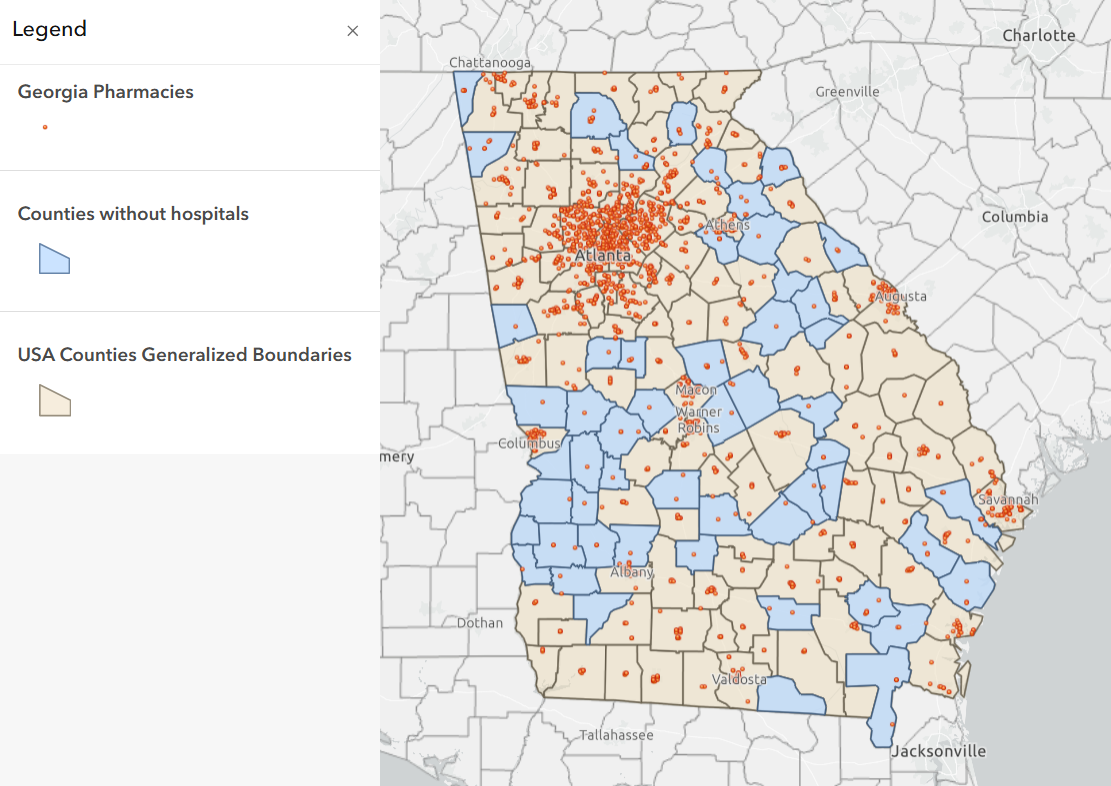
Figure 1: Map of pharmacies in Georgia that are active.
118 of these counties have a population of less than 50,000 residents.
Since 2010, nine rural hospitals have closed across the state, expanding care gaps.
Residents in these areas face severe travel burdens just to obtain basic medication.
As of 2026, there are only 73 remaining rural inpatient hospitals in the state. Of those, nearly half (47%) operate with a net loss on their clinical services, and 12 are at risk of immediate collapse. When a rural pharmacy closes, the local primary care physician and these already vulnerable emergency departments are forced to absorb the displaced patients.
Building a resilient path forward
Despite these challenges, there is growing momentum to protect local health infrastructure and restore balance to the pharmaceutical marketplace. State and federal leaders are beginning to recognize the essential value of community pharmacies.
At the federal level, the Consolidated Appropriations Act of 2026 outlines new requirements for transparency regarding fees, rebates, and drug pricing strategies. However, because federal action alone cannot fully address local market dynamics, state governments are leading the charge.
Momentum in the South and beyond
Across the country, states are enacting legislation to protect local pharmacies from uncompetitive practices. In 2025, Georgia Governor Brian Kemp signed House Bill 196 into law, a significant step that requires fair and transparent reimbursements and dispensing fees starting January 1, 2026.
| State leadership | Recent reform highlights |
|---|---|
| Indiana | Imposes fiduciary duty on PBMs to insurers, mandates rebate pass-throughs, and establishes clear pharmacy network requirements. |
| Louisiana | Enforces mandatory rebate pass-throughs, restricts spread pricing, and prohibits discrimination against 340B-covered entities. |
| Texas | Establishes rebate pass-throughs, prohibits clawbacks and retroactive denials, and bans pharmacy gag clauses. |
| Virginia | Enacts rebate pass-through provisions, prohibits spread pricing, and regulates pharmacy audit practices to ensure fairness. |
The path forward is clear. By pursuing enforceable reforms that mandate fair and equitable reimbursements linked to actual drug acquisition costs, we can ensure that local pharmacies remain open.
New data helps us offer better guidance to policymakers. By working together, we can champion policies that safeguard economic stability and ensure that equitable, high-quality care remains within reach for all rural communities.