

The landscape of public health in the American South
Mobile health units don't exist in a vacuum; it must be understood within the specific regional context in which it operates. The American South is a region of community strength and resilience. However, it also faces unique vulnerabilities that place pressure on its public health infrastructure. Across the core focus states of the Southern Alliance for Public Health Leadership—Georgia, North Carolina, South Carolina, Tennessee, and Alabama—the data paints a stark picture of our existing health and public health infrastructure.
The traditional healthcare safety net in the South - which was never perfect to begin with - is deteriorating. Over the last two decades, 51 hospitals have closed or converted in Alabama, Georgia, North Carolina, South Carolina, and Tennessee. These closures have created sprawling medical care deserts, severely limiting local access to primary care providers, mental health professionals, and maternal care. In Alabama, half of the state's 52 rural hospitals are currently facing severe financial threats, exemplified by the recent closure of the Thomasville Regional Medical Center which left its community without a functional hospital.
The maternal and infant health metrics are equally dire. This infrastructure collapse has decimated obstetric access; 23 out of Alabama's 54 rural counties are maternity care deserts. Consequently, Alabama has the nation's highest maternal mortality rate at 65 deaths per 100,000 live births with black women at 100 deaths per 100,000 live births. Infant mortality remains a critical concern, characterized by stark racial inequities: the mortality rate for Black infants in Alabama is 11.8 per 1,000 live births, much higher than that for white infants.
Compounding the crisis of access is a growing crisis of communicable disease vulnerability. Southern states are experiencing alarming declines in pediatric immunization rates, driven by complex intersections of logistical barriers and rising religious exemptions. Many states in the South currently report a measles, mumps, and rubella (MMR) vaccination rate below the 90% threshold required for community immunity, setting the stage for severe localized outbreaks, such as the cluster of almost a thousand measles cases recently documented in Spartanburg, South Carolina.
"When traditional, brick-and-mortar healthcare infrastructure collapses, the reliance on alternative delivery models—specifically mobile health clinics—naturally increases."
In regions grappling with maternal care deserts and infectious disease outbreaks, the ability to physically transport clinical services to the patient is an invaluable logistical advantage. However, if these mobile assets are deployed poorly, without integration into the complex social fabric of the communities they are meant to serve, they will fail to reach the most vulnerable populations, thereby reinforcing the very health inequities they were purchased to dismantle.
The clinical and economic promise of mobile health clinics
Mobile Health Clinics (MHCs) have emerged as a potential structural solution to address healthcare disparities, providing accessible and timely care to historically underserved populations. The national scope of mobile medical outreach is vast and rapidly expanding, with many public health and health systems receiving funds from Build Back Better to invest in mobile clinic infrastructure.
The obvious utility of mobile health clinics lies in its ability to bypass geographic and logistical barriers. Mobile medical outreach strategies can engage hard-to-reach populations, minority groups, individuals experiencing homelessness, and groups navigating multiple competing health and social needs.
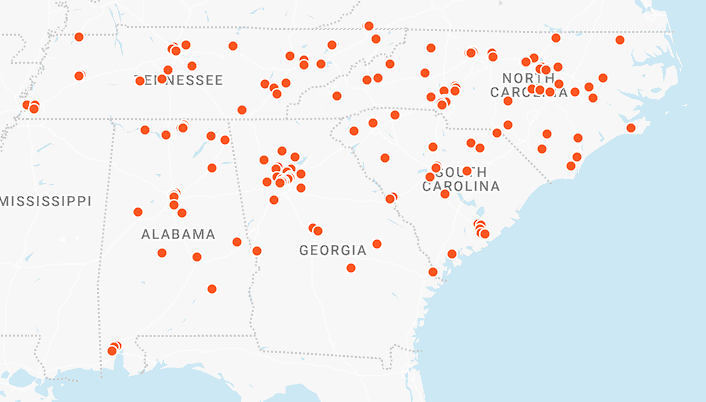
The demographics of MHC utilization reflect this targeted reach: historical data indicates that more than half of mobile clinic clients are women (55%) and racial or ethnic minorities (59%). Furthermore, 41% of clients served are uninsured, while 44% rely on some form of public insurance.
Mobile clinics improve access to preventive services, support chronic disease management, and reduce unnecessary emergency department (ED) utilization. Mobile clinics also facilitate the provision of social determinants of health screenings, hypertension monitoring, diet counseling, mammography, and primary care directly at the curbside. During systemic shocks, such as the COVID-19 pandemic when pediatric preventive care visits and vaccination rates declined sharply, mobile health units created opportunities to fulfill community needs, increasing access to vital immunizations, and maintaining continuity of basic care.
From a health economics perspective, the return on investment (ROI) for mobile health clinics is high. Because they can divert patients from high-cost emergency departments and mitigate the progression of chronic diseases through early intervention and on-the-spot diagnostics, mobile units can generate significant cost savings for the broader healthcare system.
Despite impressive measures that indicate a good return on investment, an intrinsic vulnerability remains: the value of a mobile health clinic is entirely dependent on patient utilization. A state-of-the-art medical vehicle, complete with point-of-care laboratory analyzers and electronic health record integration, is practically worthless if the community refuses to step inside it. When institutions invest heavily in the physical vehicle but fail to invest in the community engagement required to drive utilization, these highly capable medical assets are reduced to expensive billboards idling in empty parking lots. The clinical promise of the MHC cannot be unlocked without a parallel commitment to sociological integration.
The "parachute" public health phenomenon
The failure of mobile health deployments often runs parallel to "parachute science" or "helicopter research." In academic and ecological research, parachute science describes an exploitative, extractive practice where researchers from high-income or highly resourced institutions drop into marginalized or low-income areas to conduct studies. These researchers extract data, samples, or local knowledge, and then return to their home institutions to publish their findings, completely failing to acknowledge local expertise, engage the community, or feed insights back into the local infrastructure.
The institutional deployment of mobile medical units often functions as a physical embodiment of this extractive mindset. Health departments and major medical centers routinely chuck these units into underserved neighborhoods with little forethought or preliminary relationship-building. Institutions operate under the implicit assumption that what they have to offer is so objectively necessary that residents will simply flock to the services.
When health institutions parachute into a neighborhood solely when they have a specific service to hawk—such as a grant-funded vaccination push—or a communicable disease crisis to manage, they signal to the community that they view them merely as landing pads for institutional goodwill, rather than as equal partners in health generation.
Limitations and structural constraints of isolated deployments
The literature identifies several severe operational limitations of the mobile health clinic model when it is unmoored from local community integration, which are exacerbated by the parachute approach.
Continuity of care is notoriously difficult to maintain in mobile settings. Without local CBO coordination, patient referral tracking routinely fails. Many patients cannot be followed up with, rendering the intervention highly episodic rather than longitudinal.
Confidentiality is difficult to maintain in small mobile units. Furthermore, reliance on generators jeopardizes vaccine storage, and spotty broadband restricts EMR access. A local CBO partner is vital to provide physical staging grounds and internet access.
The idea that "if we build it, they will come" ignores the reality that marginalized populations face immense barriers beyond geography. Clinical authority does not automatically supersede the need for local, relational legitimacy.
Conclusion
Mobile health clinics can help bypass the geographic, temporal, and systemic barriers that prevent vulnerable populations in the American South from accessing life-saving care. The vehicles themselves are proven, cost-effective, and highly adaptable public health tools capable of generating massive returns on investment and preventing thousands of emergency department visits. However, the prevailing institutional methodology for deploying them remains fundamentally broken. By perpetuating a model of parachute public health, large institutions continuously overvalue their physical assets and devalue the local trust, capital, and labor required to generate meaningful health outcomes.
If public health systems in the South are to reverse the devastating trends in hospital closures, maternal mortality, and vaccine hesitancy, they must fundamentally change how they operate. This requires a transition from top-down, episodic deployment to lateral, sustained partnership. True health equity demands that larger institutional players view their smaller counterparts—CBOs, faith-based groups, and local nonprofits—as absolute equals.
The implementation of the "Before You Park" checklist is not merely a logistical best practice; it is a mandate for institutional accountability. By defining shared baselines, committing to the long game, and explicitly funding the burden of community outreach, public health institutions can dismantle the extractive legacy of parachute science. It is time to stop aimlessly rolling into neighborhoods and begin the slow, deliberate, and intentional work of actually partnering with them, ensuring that every community has the power, resources, and trust necessary to secure its own health.
The "Before You Park" policy framework
To structurally eliminate the practice of parachute public health, health departments, philanthropies, and hospital systems must mandate a standardized operational pause before deploying mobile health assets. Effective public health requires checking institutional egos at the door and committing to the slow, intentional work of relationship-building.
Before anyone puts the keys in the ignition of a mobile clinic, institutional leadership must sit down with their local community partner and successfully answer three foundational policy questions. This checklist serves as a binding framework for equitable engagement, ensuring that the deployment is mutually beneficial, sustainable, and adequately resourced.
What is the agreed-upon baseline number of participants that makes this visit worthwhile for both of our organizations?
Success cannot be dictated unilaterally by the institution's needs, grant deliverables, or epidemiological targets. Both the healthcare institution and the CBO must collaboratively define what a successful deployment looks like. For the institution, this may involve a specific quantitative metric, such as 50 pediatric vaccines administered. For the CBO, success might be qualitative or structural—such as enrolling participants in local housing assistance programs, distributing food, or gathering community feedback.
Setting a shared numerical and qualitative baseline ensures that expectations are transparent and mutually beneficial. It forces the institution to acknowledge the CBO's strategic priorities and prevents post-event friction. Aligning engagement metrics with agency values ensures historically marginalized groups are truly heard.
Is this a one-off event, or is it tied to a specific, long-term community goal?
Mobile units must serve as a bridge to a permanent medical home, not a replacement for one. Parachuting in during a crisis and vanishing afterward generates justifiable cynicism, erodes trust, and exacerbates the fragmentation of care. Therefore, every mobile deployment should be explicitly mapped to a clear longer term objective.
For example, connecting a child to care and yearly well visits is vital. The deployment plan must outline guaranteed return dates, automated provider reminders, and mechanisms for tracking successful patient referrals to established specialty clinics or primary care providers. The goal is not just to treat the patient today, but to connect them to a resilient system for tomorrow.
How are we financially compensating the local partner for the outreach required to make people show up?
This is the most important component of the framework. Institutions must back their priorities with their budgets. A dedicated budget line item for "Community Engagement" must be standard in the operational forecast of every mobile health unit deployment.
Institutions must abandon the assumption that CBOs will mobilize the community for free. If a hospital can foot the bill for a mobile clinic's massive operating costs, it must simultaneously route actual, unrestricted funding to the CBO partners executing the ground-level community building. True community engagement costs money; failing to fund it is a policy failure.